
E-commerce Content Strategy: Content That Brings Buyers, Not Just Visitors
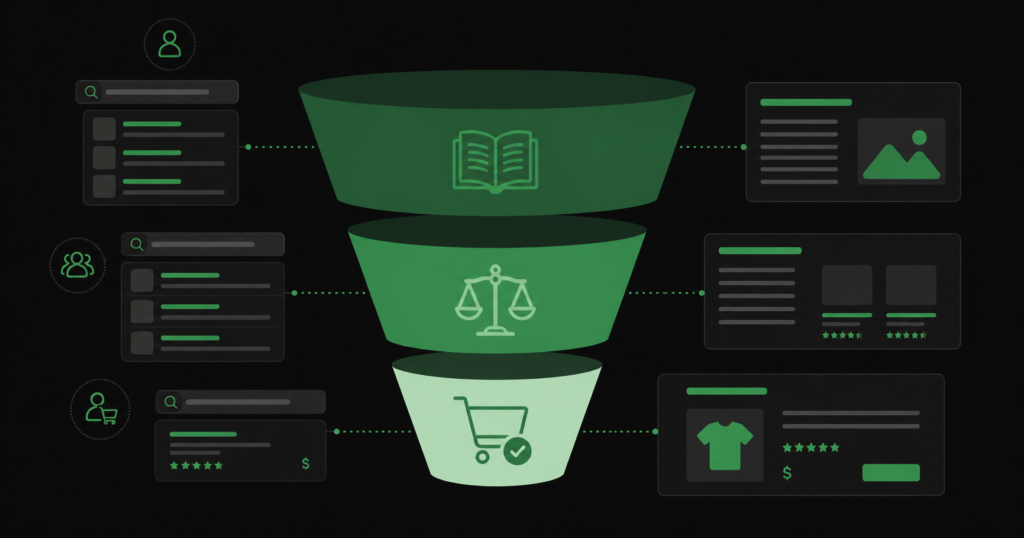
Most e-commerce content strategies fail for the same reason: they optimise for traffic instead of buyers. A real content strategy starts with buyer intent – and builds every piece of content around the moments when your customers are closest to making a decision.
Why Generic Content Does Not Work for E-commerce
There is a common misconception that any SEO content is good SEO content. Write more blog posts, get more traffic, make more sales. In practice, this rarely works.
| A blog post about “10 tips for choosing the right office chair” might attract readers. But if your store sells office chairs and your category pages are not optimised, the readers will not find what they are looking for – and they will leave. Meanwhile, your actual buyers are searching for “ergonomic office chair under R5,000 South Africa” and finding your competitors instead.“The solution is not to stop creating content. It is to create the right content – content that matches where buyers are in their journey and points directly to what you sell.” |
Types of Content We Create for Online Stores
Product Page Copywriting
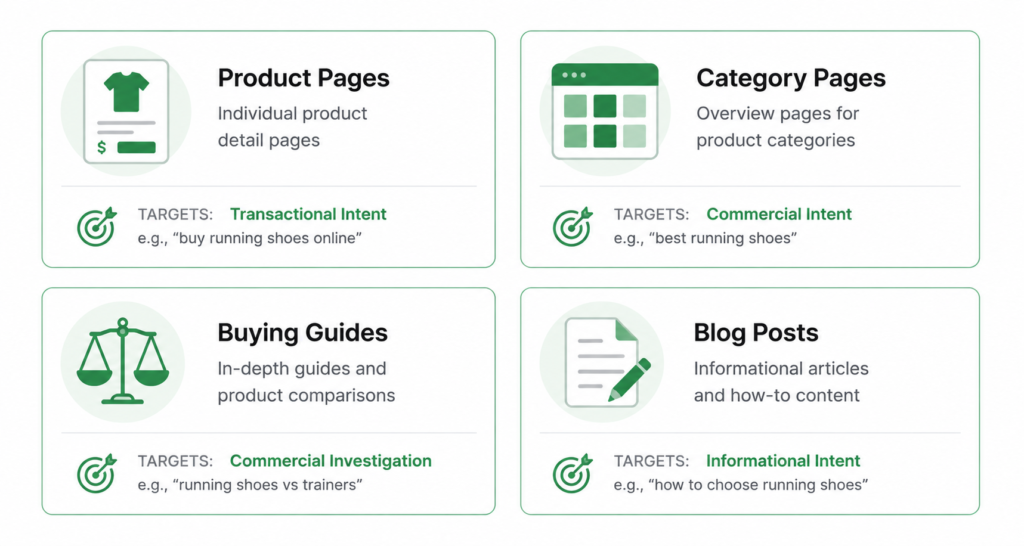
Most product descriptions are either copied from manufacturers – which creates duplicate content issues and adds no value – or are a single sentence with the SKU number. A properly written product page answers every question a buyer might have, incorporates the right keywords naturally, and gives Google enough substance to understand what the page is about. We write product descriptions that rank and convert.
Category and Collection Page Content
Category pages are often the highest-value pages on an ecommerce site — they can rank for broad, high-volume terms and funnel shoppers into specific products. Yet most stores leave them as blank grids with no text. We write introductory content for category pages that provides context for Google and helps buyers narrow down their options.
Buying Guides and Comparison Pages
Buyers researching a significant purchase often search for guidance before they buy. “Best standing desk South Africa”, “Shopify vs WooCommerce for small business” — these comparison and guide searches represent people who are close to a purchase decision and looking for a trusted source to help them decide. We build buying guide content that captures this traffic and drives it toward your products.
Blog and Informational Content
Strategic blog content serves two purposes: it attracts early-stage buyers who are still researching, and it creates internal linking opportunities that boost your core product and category pages. We build blog content strategies that connect directly to your commercial goals — not random topics that generate traffic with no conversion intent.
What Is Included in Our Content Strategy Service
| Keyword Research | Buyer-intent keyword research — transactional, commercial, and research-stage queries for your catalogue |
| Content Gap Analysis | Your current content vs what your competitors rank for — every opportunity documented |
| Content Calendar | Prioritised plan with specific page recommendations and sequencing |
| Content Briefs | For each piece: keyword targets, structure, word count, internal linking, and CTA direction |
| Copywriting | Product pages, category pages, and buying guides — optional, scoped separately |
| Performance Tracking | Monthly reporting on content rankings, traffic, and conversion contribution |
How We Build Your Content Plan
| We start with a discovery call to understand your products, your customers, and your current content situation. From there, we build a content map that connects your catalogue to the specific search queries your buyers use at every stage of the journey. Every piece of content we recommend has a clear purpose and a clear metric for success. |
Frequently Asked Questions
| Question | Answer |
| Do you write the content or just create the strategy? | Both. We can deliver a full content strategy with briefs for your team to execute, or we can handle the writing ourselves. Most clients start with the strategy and then bring us in for content creation on priority pages. |
| How much content do I need? | It depends on your catalogue and competitive landscape. We typically recommend starting with 10-20 priority pages — the category pages and product pages most likely to drive revenue — before expanding to a broader content programme. |
| Will this work for a niche store? | Often better than for a broad store. Niche stores can dominate specific keyword clusters where larger competitors do not focus. We find those opportunities and build around them. |
| How long before content starts ranking? | New content typically takes 3-6 months to rank, depending on domain authority and competition. Optimised existing pages can move faster. We track performance monthly and adjust the strategy based on what is working. |