
Ecommerce SEO Audit: Find Out Why Your Store Is Not Ranking
Your store is live. Your products are great. But Google does not seem to agree. If your organic traffic is flat, your category pages sit on page 3, or your competitors consistently outrank you — there is a reason. And that reason almost always shows up in an SEO audit.
What Is an Ecommerce SEO Audit — and Why Do You Need One?
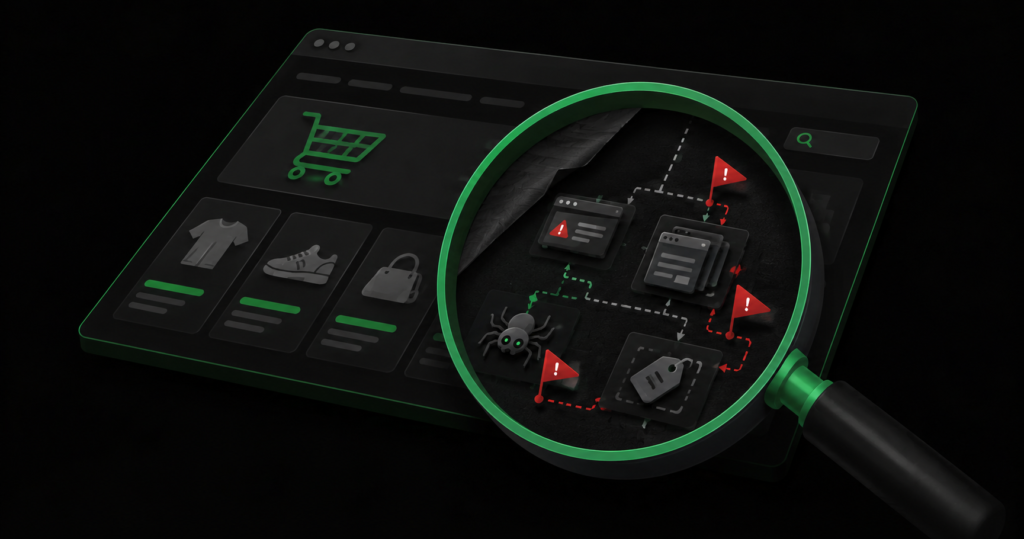
| An SEO audit is a structured analysis of your online store that identifies the technical, on-page, and competitive issues preventing you from ranking on Google. For ecommerce stores, this goes beyond a standard website review — it covers the specific problems that affect product pages, category structures, filter-generated URLs, and more. Most ecommerce stores have more SEO issues than their owners realise. Duplicate content from product variants, slow page load times, missing meta tags on hundreds of product pages, a disorganised site structure — these are all common and all fixable. But only if you know they are there. |
Before you invest in content, link building, or any ongoing SEO work, you need to know exactly what is holding your store back. That is what a MarTraff ecommerce SEO audit delivers.
What Is Inside Your Ecommerce SEO Audit
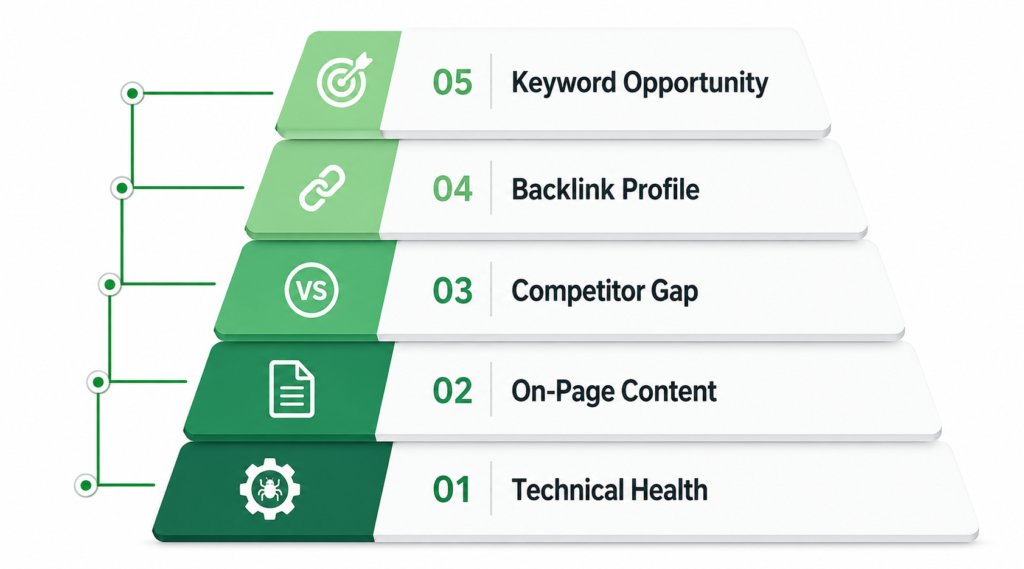
The MarTraff audit covers every layer of your store’s SEO performance.
Technical Health Check
We review how Google crawls and indexes your store. This includes checking for crawl errors, broken links, redirect chains, duplicate content from filters and pagination, Core Web Vitals performance, mobile usability, and indexation status. For ecommerce stores with large product catalogues, these technical issues can silently block thousands of pages from ranking.
On-Page and Content Analysis
We audit your title tags, meta descriptions, H1 structures, and content quality across your key pages — homepage, category pages, and top product pages. We check for keyword cannibalisation, thin content, and missed opportunities where stronger copy could improve both rankings and click-through rates.
Competitor Gap Analysis
We map out who is actually ranking for your target keywords and why. By analysing your main competitors, we identify the gaps in your content, backlink profile, and site structure that are giving them an edge. This turns the audit into a strategic roadmap — not just a list of problems.
Backlink Profile Review
We analyse your current link profile: how many referring domains you have, their quality and relevance, and whether any toxic links may be affecting your authority. We compare this against competitors to show you the gap you need to close.
Keyword Opportunity Mapping
We identify which keywords you are close to ranking for, which pages have the potential to move into top positions with targeted improvements, and where the easiest wins are. For ecommerce, this often means finding transactional and category-level keywords that are underserved by your current content.
How the Audit Works
The process is straightforward and does not require you to do anything technical.
| Step 1 You share your website URL and any specific concerns or goals. | Step 2 Our team conducts a full technical and competitive analysis over several days. | Step 3 You receive a detailed audit report with prioritised recommendations. |
We use industry-leading tools including Screaming Frog, Google Search Console, Ahrefs, and PageSpeed Insights to ensure nothing is missed.
What You Get: Your Audit Report
At the end of the audit, you receive a structured PDF report that includes:
| ✓ | A prioritised list of technical issues with severity ratings |
| ✓ | On-page recommendations for your key pages |
| ✓ | Competitor analysis findings |
| ✓ | Keyword opportunity map |
| ✓ | A clear action plan — what to fix first and why |
| “The report is written in plain English. No jargon, no fluff — just actionable findings you can implement immediately or hand to your developer.” |
A Real Example
| What a 49-Page SEO Audit Looks Like For a premium kitchen appliances store, we delivered a 49-page audit covering technical health, on-page analysis, competitor gaps, and a full keyword opportunity map. No vague recommendations — every finding was tied to a specific page and a specific fix. See the full audit breakdown → |
Frequently Asked Questions
| Question | Answer |
| How long does an ecommerce SEO audit take? | Typically 3-5 business days depending on the size of your store. Larger catalogues may take longer. |
| Is this a free audit? | MarTraff offers a paid SEO audit — not a free 5-minute automated report. A proper audit requires real analysis by an experienced SEO specialist, and the output reflects that. |
| Do I need to give you access to my website? | We will need access to Google Search Console and Google Analytics if available. We can also work with just your URL, though GSC access gives us more accurate data. |
| What happens after the audit? | You can implement the recommendations yourself, hand them to your developer, or engage MarTraff to handle the work. There is no obligation to continue. |
| Is the audit specific to ecommerce platforms? | Yes. We work with Shopify, WooCommerce, and custom-built stores. The audit is tailored to the specific issues common to your platform — see our dedicated pages for Shopify SEO and WooCommerce SEO for platform-specific detail. |
Work With MarTraff
| Stop guessing why your store is not ranking. Get the actual answer. A real audit, written in plain English, with a clear action plan — not a 5-minute automated report.Get Your Ecommerce SEO Audit → Paid audit. No obligation to continue. |